


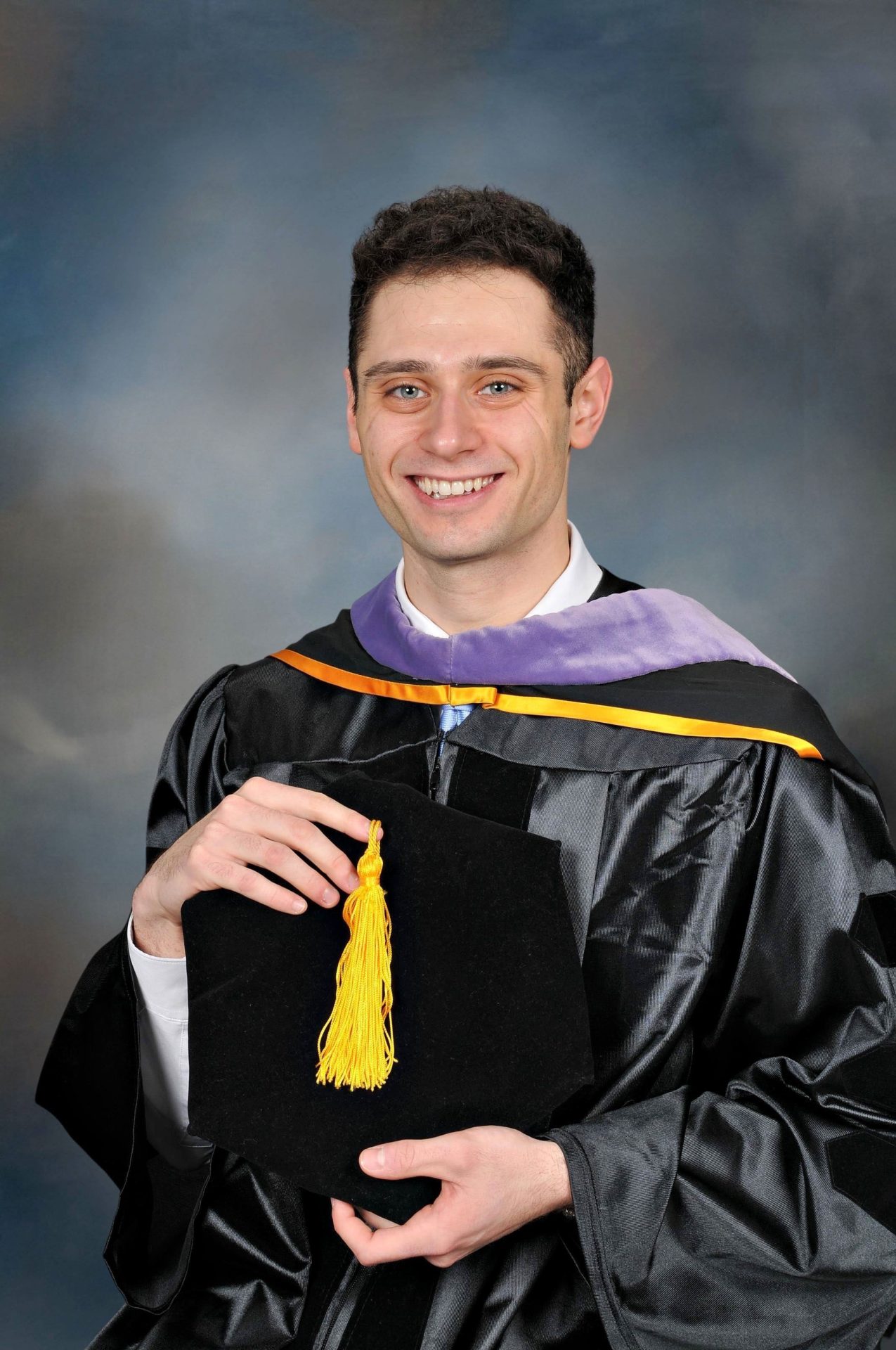
Brandon Axelrod, DDS ’25 is a first-year oral surgery resident at Weill Cornell Medicine with a unique talent for balloon art. As a dental student, Axelrod performed at celebrations across Long Island as “Magic Brandini,” and in January 2026, he began sharing his creations through social media. In less than six months, he has gained 159,000 followers on Instagram and 67,000 followers on TikTok, along with brand partnerships, influencer collaborations and even a celebrity shout-out.
Axelrod graduated from the Stony Brook School of Dental Medicine in 2025 with his DDS and says that his experience gave him the tools he needs to succeed in residency and beyond. Furthermore, he notes that mentorship from the world-class faculty at Stony Brook helped him conceptualize what kind of provider he aspires to be.
In the future, Axelrod hopes to incorporate his whimsical side into his practice. Whether creating a balloon for a patient or connecting in another way, Axelrod hopes that his expertise will help ease patients’ fears and make their experience a positive one.
Why did you choose the Stony Brook School of Dental Medicine?
I actually had the Stony Brook School of Dental Medicine in mind for years prior to submitting applications because I had several mentors that either went to Stony Brook or spoke highly of Stony Brook’s clinical experiences. As I learned more about schools, I was able to see that Stony Brook is well-recognized for offering hands-on training combined with a strong academic background. The small class size specifically was also very appealing to me and many of my classmates. I got to know my professors well, which translated to me learning more, and also created a really pleasant and collegial environment. Lastly, the fact that the School of Dental Medicine is integrated with the Renaissance School of Medicine for the first year of training was incredibly important to me because I wanted to be an oral and maxillofacial surgeon. I considered the opportunity to take courses designed for and taught by medical doctors to be invaluable to my preparation for the Comprehensive Basic Science Exam, which is comparable to the USMLE Step 1 (United States Medical Licensing Examination). Plus, it was close to home.
What is it about oral and maxillofacial surgery that is particularly rewarding to you?
I have known that I wanted to be a dentist since I was five years old, and my childhood dentist really inspired me. Toward the end of high school, I shadowed an oral surgeon for the first time and it was unlike anything I’d ever seen before. I honestly didn’t think I would like it at first, but once I was exposed to the science of it, the patient interactions and the impact you can have on a patient’s life, I fell in love with it. Building trust with a surgical patient can be difficult, and I’m attracted to that challenge. I’ve always had the interpersonal skills that I felt would serve me well in that regard. No one really wants to be at the oral surgeon, so it’s important to help them feel calm and comfortable. It’s not that different from what I love about being a balloon artist. With both surgery and balloon art, getting a client to warm up to you is really important, and I can use my expertise to help someone’s vision take shape.
Talk about your time as a dental student at Stony Brook. What activities or organizations were you part of?
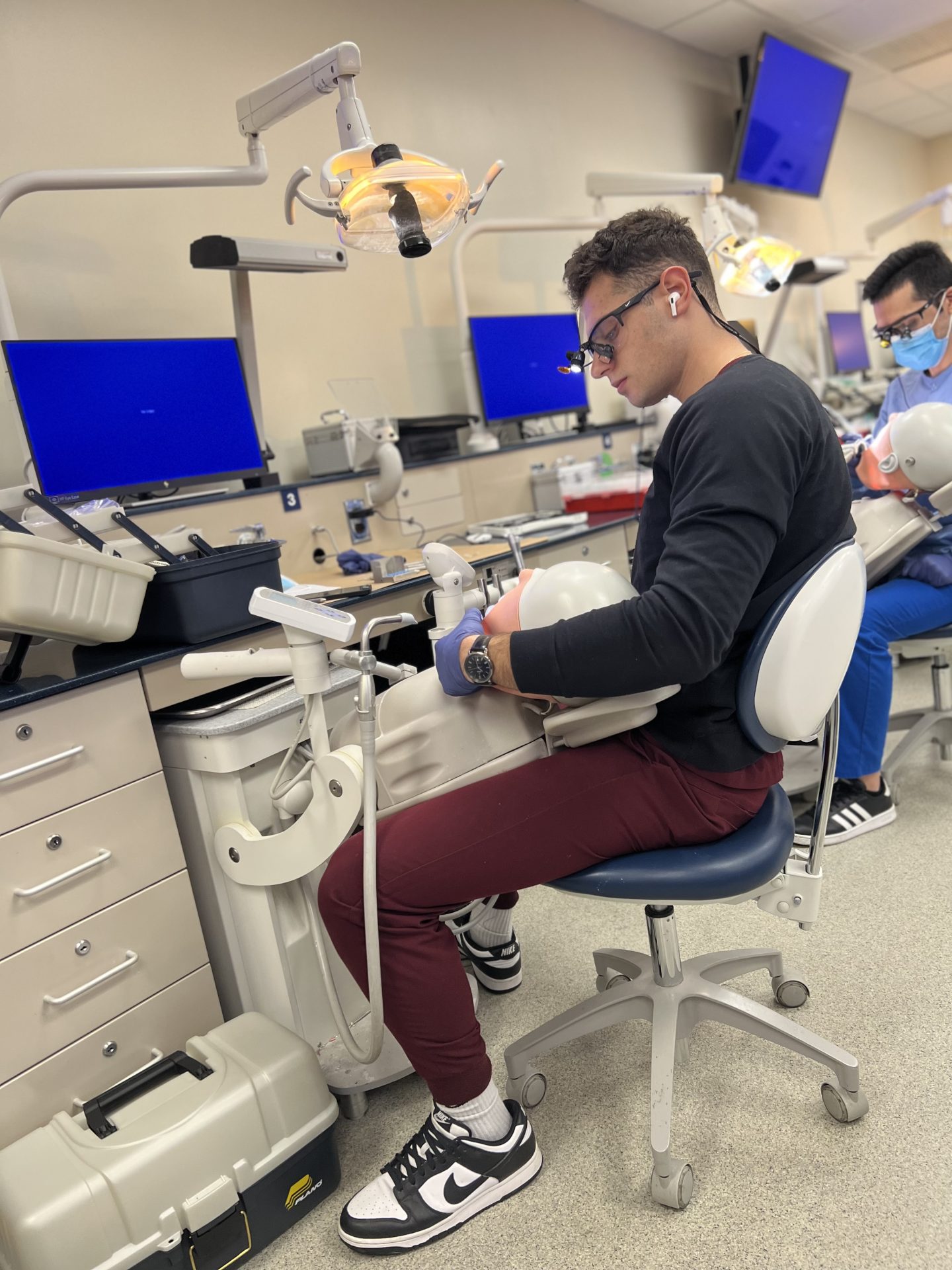
Outside of my regular course of study, I reestablished and served as president of the Oral Surgery Club at Stony Brook, which hadn’t been active for a long time. I was also the vice president of the Stony Brook chapter of the American Student Dental Association. Completing externships is an important part of applications for residencies in oral surgery, so I prioritized rotating with different oral surgery residency programs for a week at a time. I was also heavily involved in research. I was published in the Journal of Oral and Maxillofacial Surgery, which I understand is difficult to do as a student, so I was very proud of that. That project also won the Hinman Symposium Award at [the] School of Dental Medicine’s Annual Research Symposium. And of course, I had my balloon twisting business on the outside.
Did you have any mentors at Stony Brook? How did Stony Brook and/or your mentors shape your path to becoming an oral and maxillofacial surgeon?
I was fortunate to have mentors that really took me under their wing. It was so exciting to talk to accomplished surgeons with impressive operating room cases and long case logs behind them. They took time to answer my questions and let me assist in the operating room. In addition to these experiences, they helped me prepare for externships and interviews. I really gravitated toward mentors with a great bedside manner. Dr. Michael Proothi, for example, is the greatest surgeon but also an amazing person. He was an inspiration because I have a fun, whimsical side that comes through in my balloon art, and I always dreamed of incorporating that part of myself into my work in a way that would bring joy to the people in my care. My mentors also helped me narrow down what kind of oral surgery I wanted to practice. Many of my professors balanced having a private practice where they do more routine procedures, while also taking on bigger operating room cases and being involved in education, which I find to be a very attractive career path.
How has your passion for balloon art evolved over the years, and how do you expect it to shape your practice after residency?
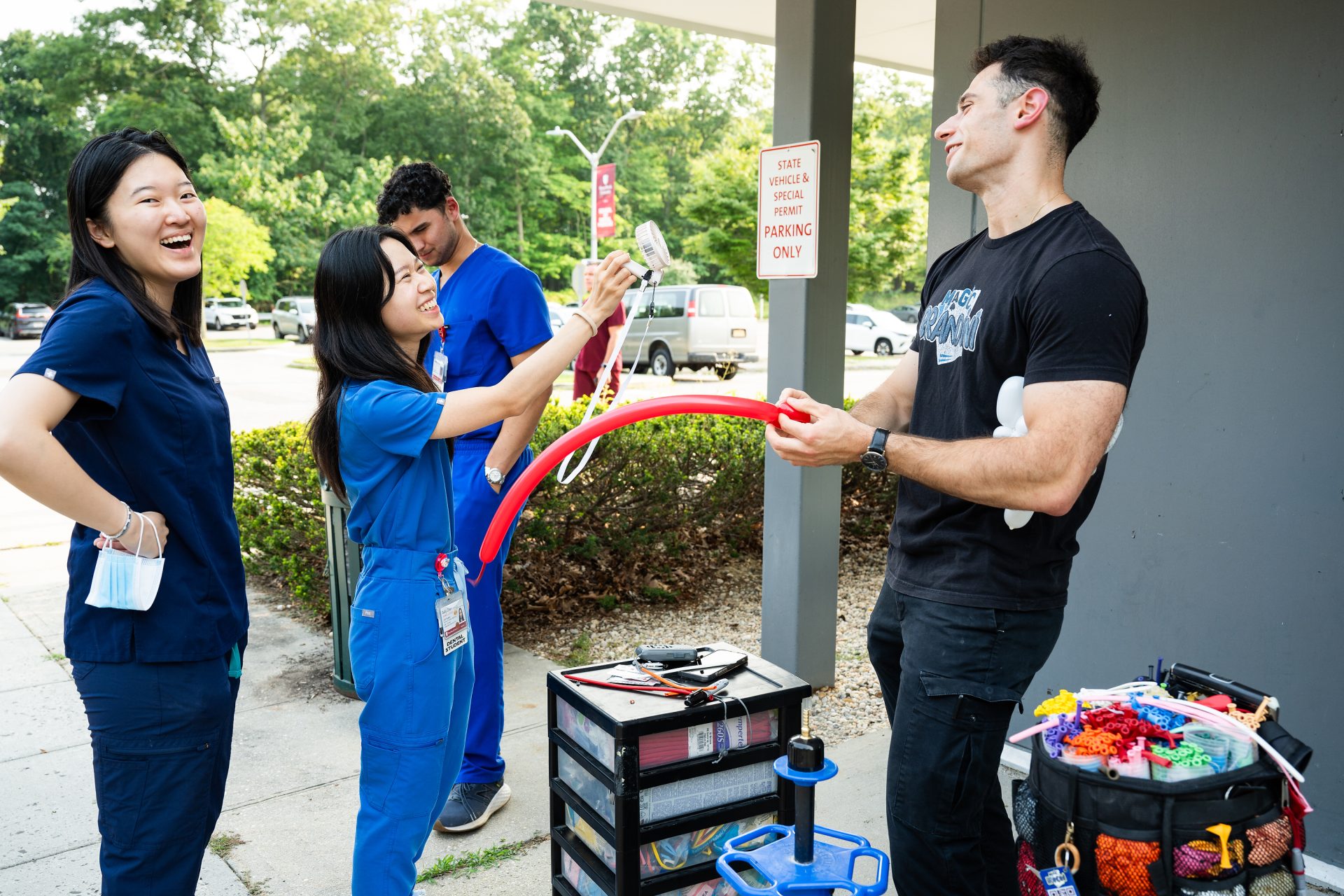
I worked at family parties at first, and started getting hired by teachers and classmates in middle school. By the time I was in high school, I had a busy event schedule during the weekends and summers, and focused on school and college preparation during the week. The business continued to grow while I was in college, and expanded even more while I was in dental school on Long Island. I performed at birthdays, block parties, religious ceremonies and all sorts of events on the weekends as Magic Brandini.
When I started my residency, I knew my schedule would be intense but didn’t want to stop my balloon business. Instead, I transitioned toward sharing my creations on social media, instead of parties, which is more manageable. The switch has given me some cool opportunities: Stephen Colbert shouted me out on his show; I have a partnership with Figs, the scrub company, as well as the balloon company I order my supplies from. I’ve also done some collaborations with other content creators. And I’ve become known as the balloon guy at work.
Ultimately, balloon art has helped me hone the interpersonal skills I need to interact with patients and alleviate any concerns they have. People who need oral surgery are understandably very nervous and in a lot of pain. You can see the look in a patient’s eyes change when they realize that you’re truly there to listen and care for them. For some patients, balloon art might be a fun addition to their experience.
What have you done since graduation? Talk about your career path so far.
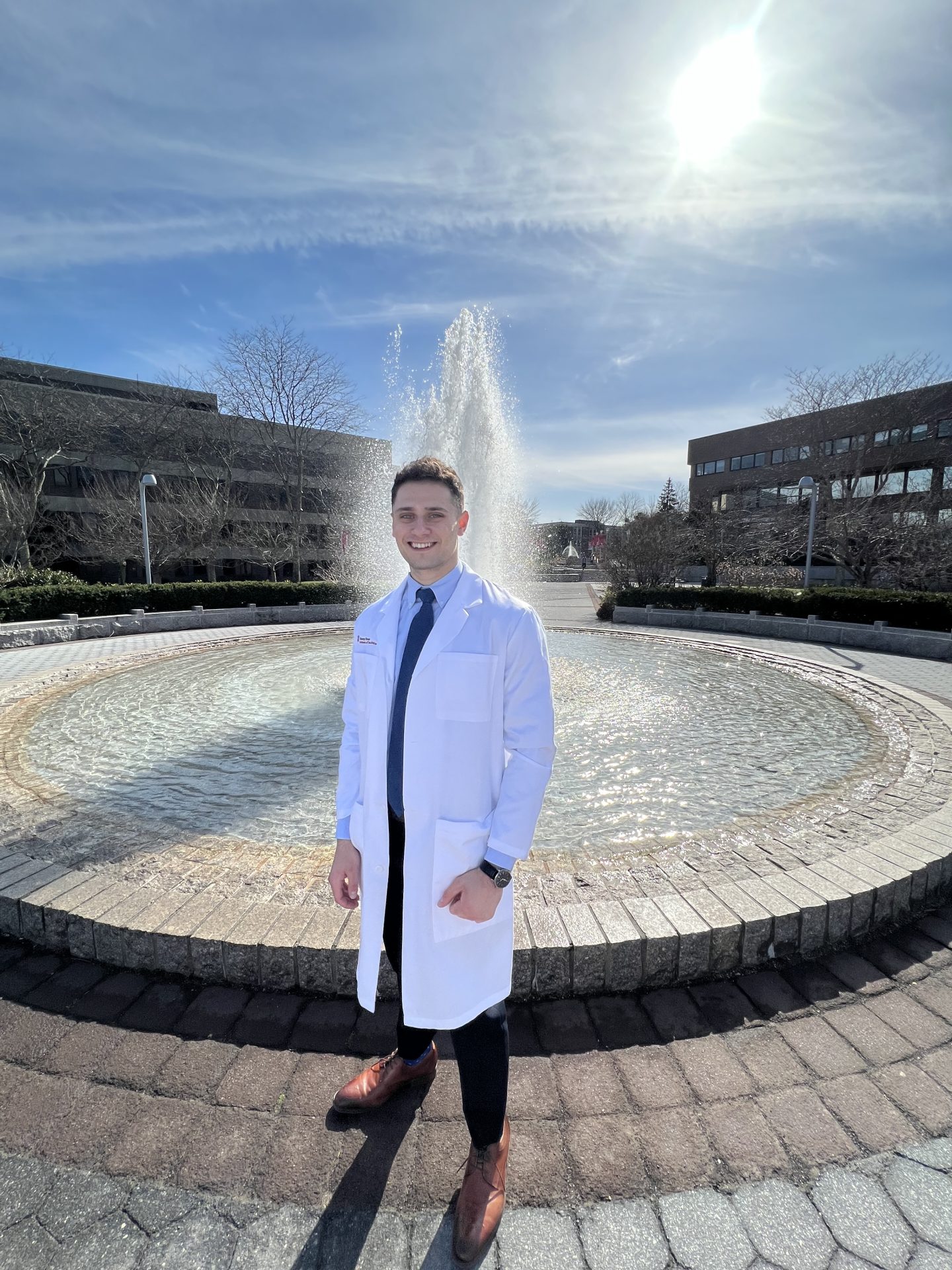
I’m a resident at Weill Cornell Medicine, and we work with NewYork-Presbyterian Queens as well. The first year of my residency is really about learning the ropes and doing a lot of the behind-the-scenes work that’s essential for surgical services to exist. Gradually, over the course of four years, I’ll start doing more hands-on work, and eventually start doing procedures. Between the two hospitals, we have a pretty diverse patient population. While a lot of the procedures are planned, we do see trauma patients as well. As a resident, I’ll also do rotations in different specialties like general anesthesia, general surgery, ENT, plastic surgery, emergency room, infectious disease and cardiology. We receive training that goes well beyond oral surgery so that we can manage medically complex cases in the future. One of my specific interests is to perform orthognathic surgery, or corrective jaw surgery such as TMJ or temporomandibular joint surgery.
What advice would you give to young alumni? What advice would you have for dental students looking to pursue a career in oral and maxillofacial surgery?
I wouldn’t be where I am if I didn’t connect with good mentors. If you find someone who is willing to give you some time, definitely take them up on it and ask questions, and send that follow-up email because they’re probably willing to help. Also, it seems cliche, but be true to yourself. Don’t worry so much about what others think of your path. I’ve learned that, at the end of the day, you have to make sure you’re happy with what you’re doing or what you’re trying to achieve. And stay motivated. One of my favorite quotes is “If you don’t sacrifice for what you want, what you want becomes a sacrifice.” I thought about that a lot as a dental student because preparing to become an oral surgeon is a lot of extra work on top of the regular dental school program. I routinely talk to applicants who are pursuing oral surgery because I know what it’s like to be on that path, and I help as much as I can.
–Rachel Steigerwald
 Engineering a Path from Stony Brook to the Skies: Zahraa Stuart’s Journey
 From Stony Brook to the Stars: Aditya Upadhyay ’25 Launches Call a Satellite
 Alumnus Kunchok Dorjee Works to Curb Spread of Tuberculosis in His Homeland
 Mentorship in Motion: How Danielle Knapp‑SanGiovanni, MSW ’20 Is Guiding Emerging Social Workers

