


Human expertise and engineering have played a central role in shaping the large language models (LLMs) we use today. People wrote training examples, ranked model responses, corrected errors, and provided the knowledge and judgment needed to guide model development.
This human supervision has been crucial to improving LLM capabilities, but it comes with significant drawbacks. It is expensive, slow, difficult to scale, and ultimately bound by human knowledge and effort. At the same time, with the rise of AI agents, automated systems are becoming increasingly capable of generating data, providing feedback, evaluating outputs and even coordinating complex workflows.
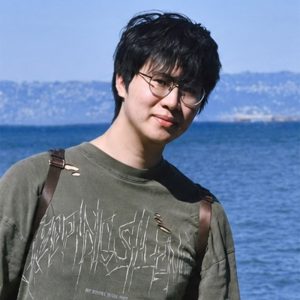
Stony Brook University’s Haoyan Yang, a PhD student in computer science, and Jiawei (Joe) Zhou, assistant professor in the departments of Applied Mathematics and Statistics and Computer Science, spent a year exploring this shift. What happens when human supervision becomes a bottleneck, and how can models increasingly take part in their improvement?
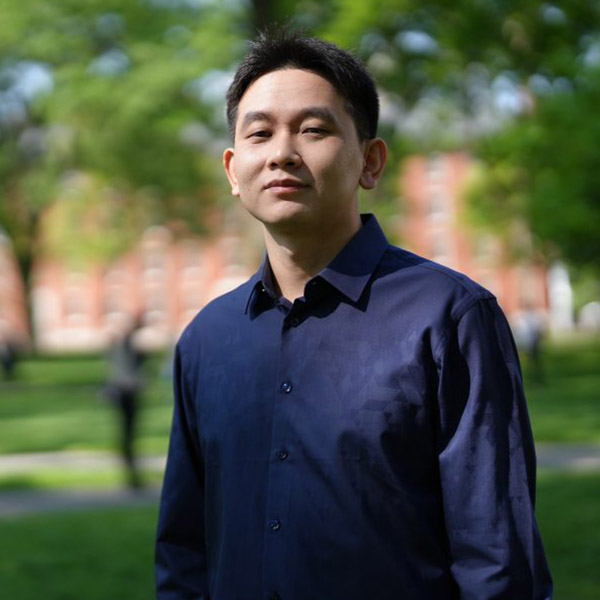
Their research “Self-Improvement of Large Language Models: A Technical Overview and Future Outlook” is the work of the Research NLP Lab and was recently accepted by the Transactions on Machine Learning Research (TMLR) — a prestigious machine learning journal — and recognized with the Survey Certification from TMLR, an award given to accepted papers that “not only meet the criteria for acceptance but also provide an exceptionally thorough or insightful survey of the topic or approach.”
PhD students Solha Park, Huajian Zhang and Yiyang Feng, and master’s students Mario Xerri and Sai Akhil Kogilathota also shared in the collaborative effort.
Read the full story on the AI Innovation Institute website.
 Stony Brook Brings AI Expertise to Long Island Small Businesses Through LIA-AI Growth Academy
 Lav Varshney Discusses AI and the Physical Economy of Intelligence
 Two URECA Students Explore Real-World Ideas Through Research
 Solving for Tomorrow: James Glimm on Mathematics, AI and Life

